From Digital Signage to Shared Power Banks: How Retailers Are Creating New Revenue Streams
Jul 06, 2026
From Digital Signage to Shared Power Banks: How Smart Retailers Are Creating New Revenue Streams
When people think about digital signage, they usually think about advertising.
A screen displaying promotional videos, product campaigns, or brand messages can attract attention and improve communication between brands and customers.
However, modern retailers are beginning to ask a bigger question:
Can digital displays create more value than simply showing advertisements?
This question is changing how businesses evaluate commercial technology.
Instead of investing in equipment that only communicates with customers, retailers are increasingly looking for solutions that provide services, improve customer experience, and generate additional revenue.
This is where shared power bank stations are creating a new opportunity.
Why Retailers Are Looking Beyond Traditional Digital Signage
Traditional digital signage has become common in shopping malls, restaurants, airports, hotels, and retail stores.
Its main functions include:
Displaying advertisements
Promoting products and services
Enhancing brand visibility
Delivering marketing messages
While digital signage remains valuable, many businesses are realizing that passive advertising alone may not fully maximize the value of the equipment.
A digital screen creates value when customers pay attention to it.
A shared power bank station creates value when customers actively interact with it.
By combining advertising displays with charging services, businesses can transform a simple display terminal into an interactive customer touchpoint.
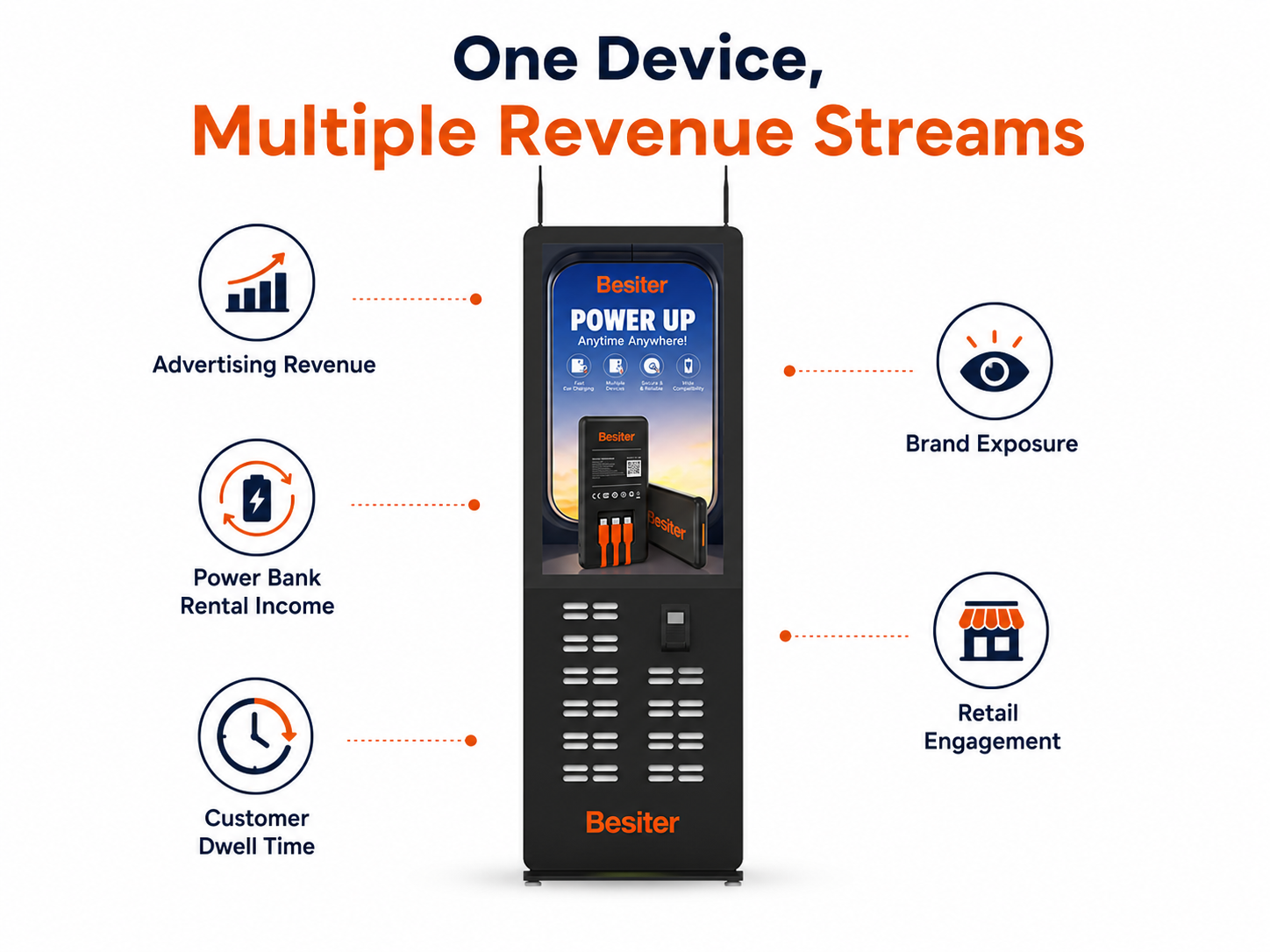
One Device, Multiple Revenue Streams
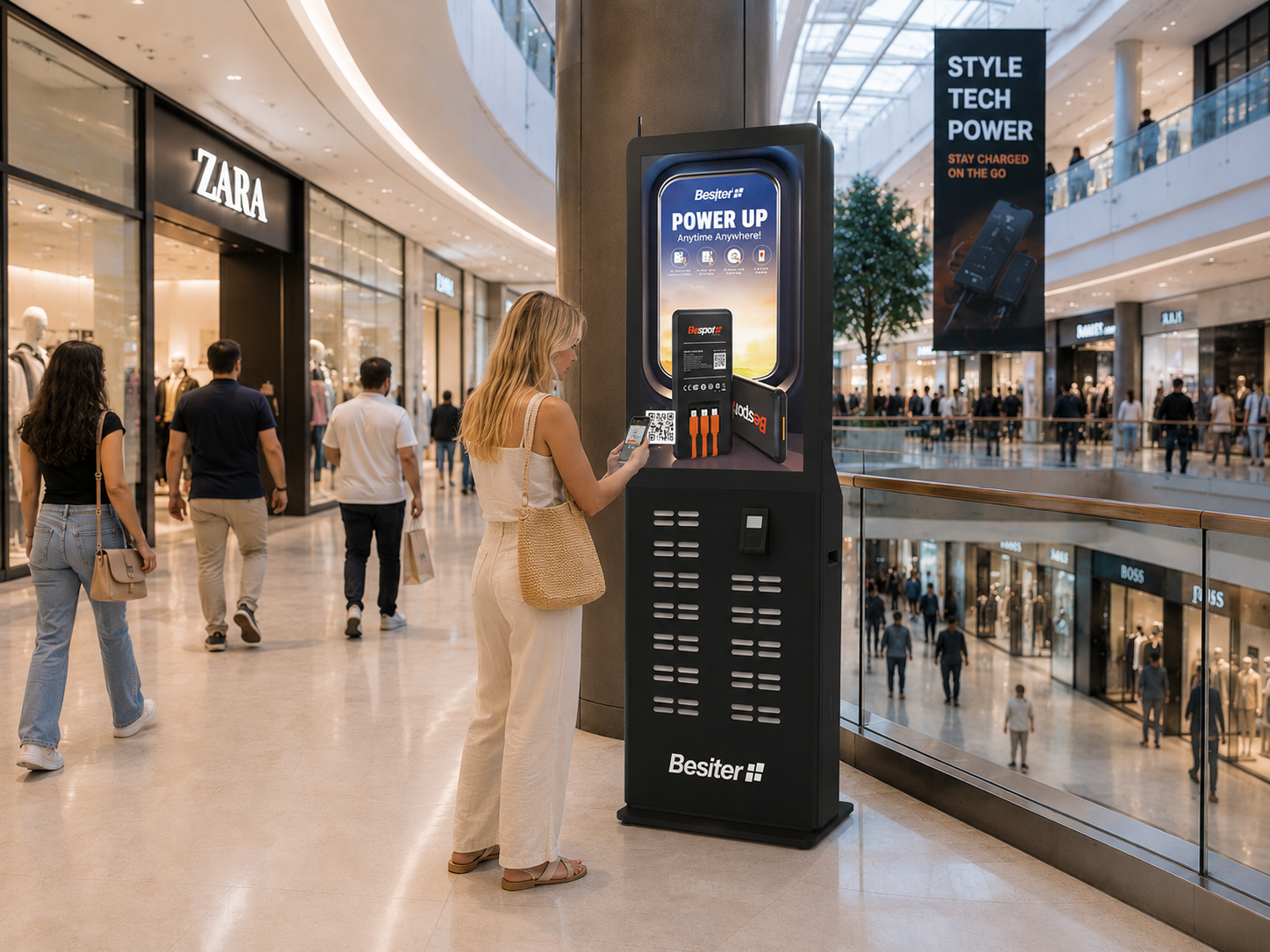
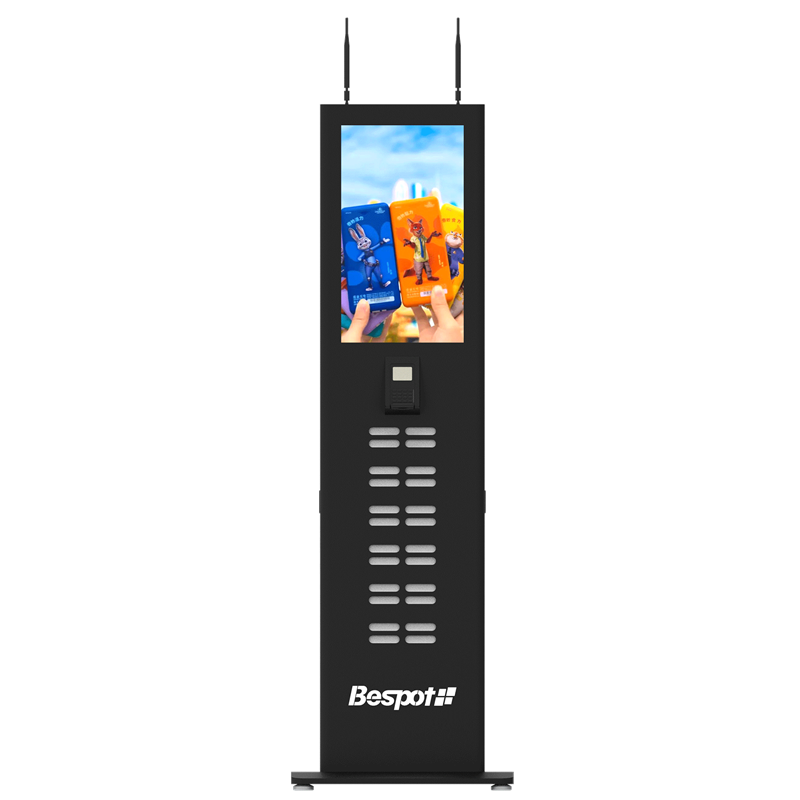
The biggest advantage of an advertising-screen shared power bank station is that it combines multiple business models into one device.
The digital display continues delivering advertisements, while the charging service provides direct value to customers.
This creates multiple potential revenue streams:
Advertising Revenue: Businesses can display promotional content, local advertisements, and brand campaigns.
Power Bank Rental Income: Customers rent portable chargers whenever they need additional battery power.
Customer Engagement: Useful services encourage customers to interact with the brand and venue.
Brand Exposure: The device becomes a visible smart retail asset.
For retailers, the equipment is no longer only a marketing expense. It becomes a business asset capable of creating continuous value.
Why Shared Charging Makes More Sense in Today's Retail Environment
Consumer behavior has changed dramatically.
Smartphones have become essential tools for:
Mobile payments
Navigation
Social media
Digital tickets
Shopping applications
Ride-hailing services
When customers run out of battery, the problem directly affects their ability to continue using these services.
Shared charging solves this problem by allowing customers to rent a power bank and continue shopping, dining, or exploring without being restricted to one charging location.
Creating More Value in Retail Spaces
Modern retail competition is no longer only about products.
Customer experience has become a key factor influencing where people choose to shop, eat, and spend time.
Shared charging creates additional value by:
Increasing customer convenience
Encouraging longer customer visits
Improving customer satisfaction
Creating additional interaction opportunities
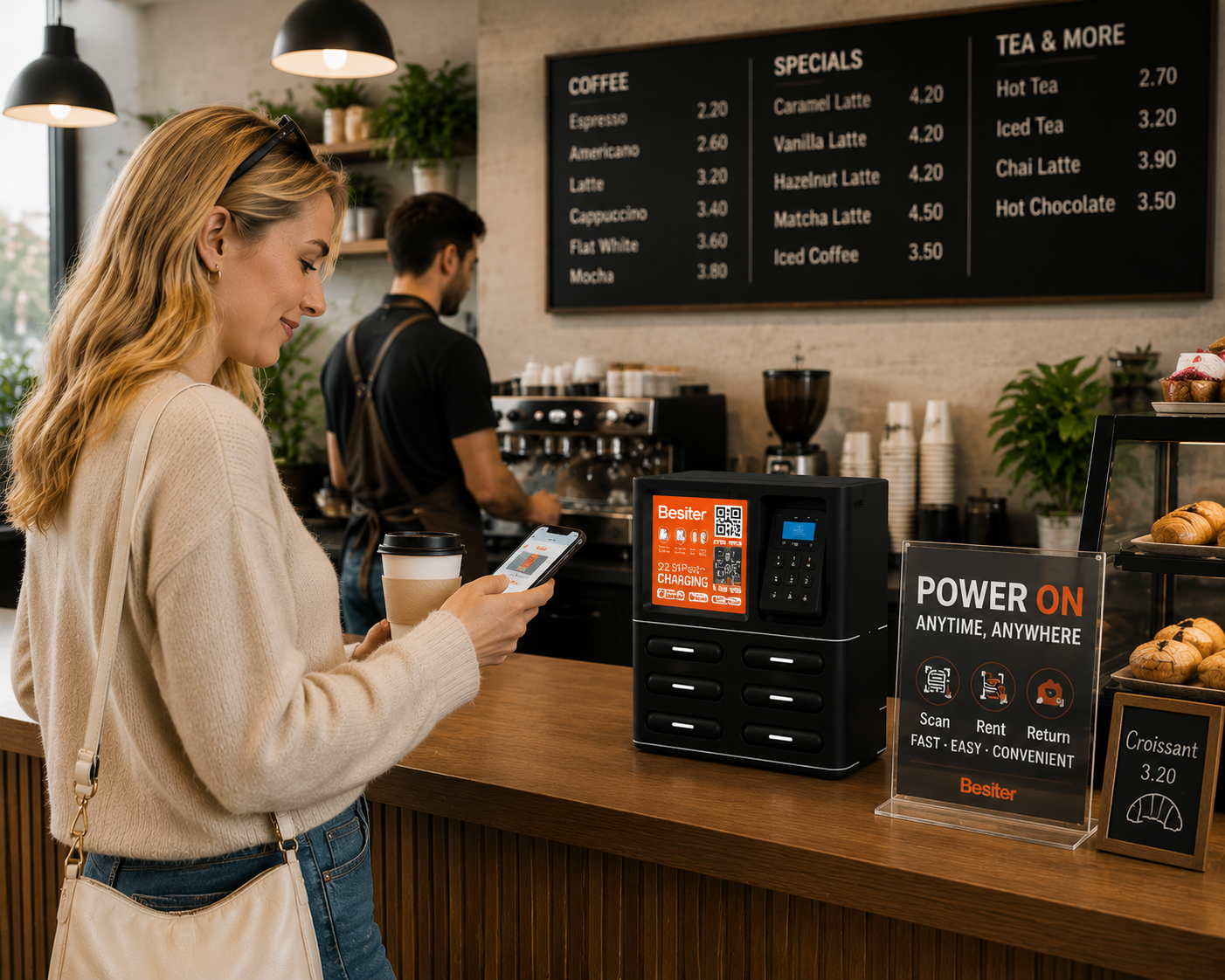
For restaurants, cafes, and entertainment venues, charging services can directly support longer customer dwell time.
From Advertising Displays to Business Solutions
The future of digital signage is becoming more interactive.
Businesses are moving from passive communication tools toward smart retail infrastructure that combines:
Advertising
Customer services
Data management
Revenue generation
A shared power bank station represents this transformation.
The screen attracts attention.
The charging service creates interaction.
The business model creates recurring value.
Why OEM/ODM Capability Matters
Different markets and industries have different requirements.
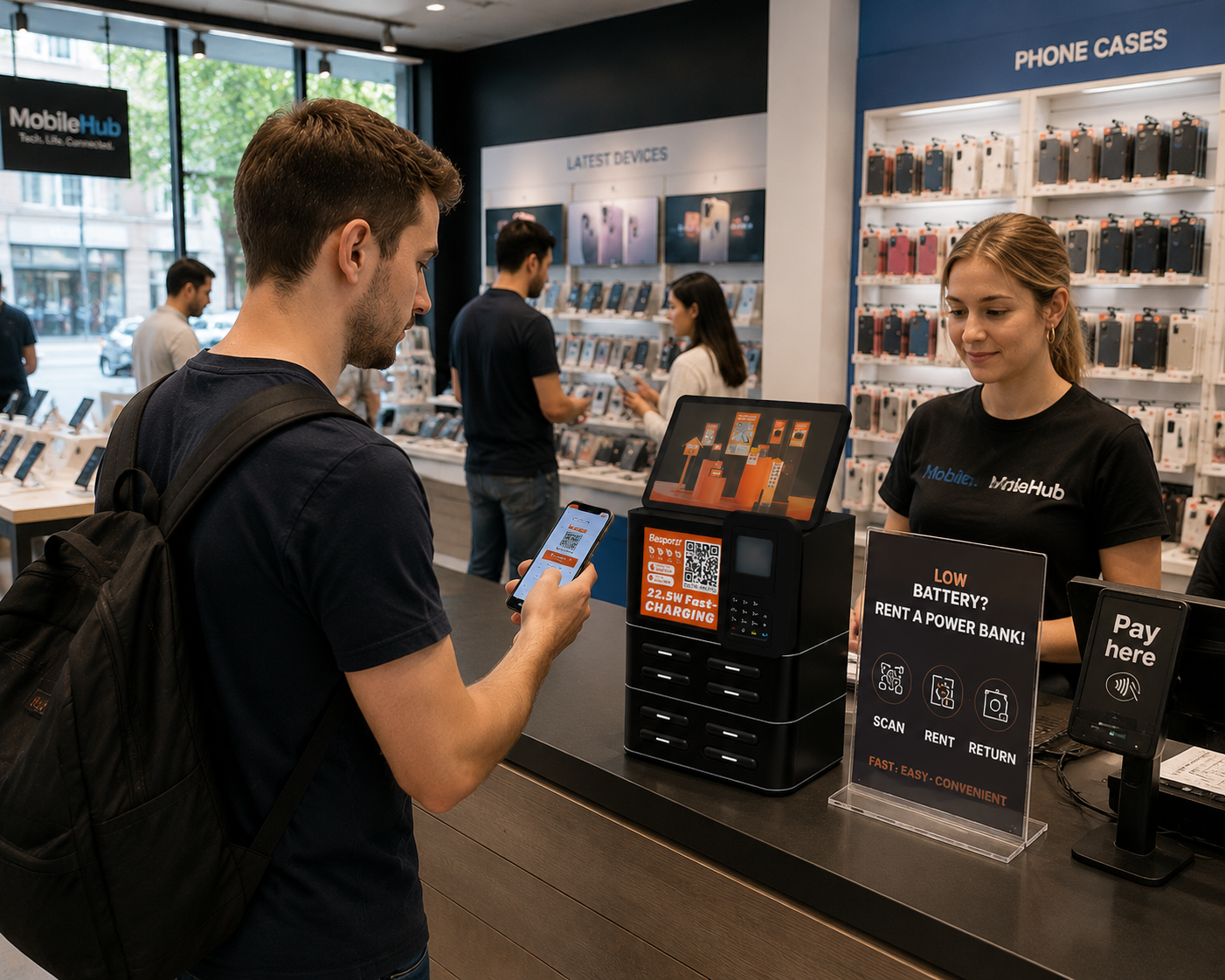
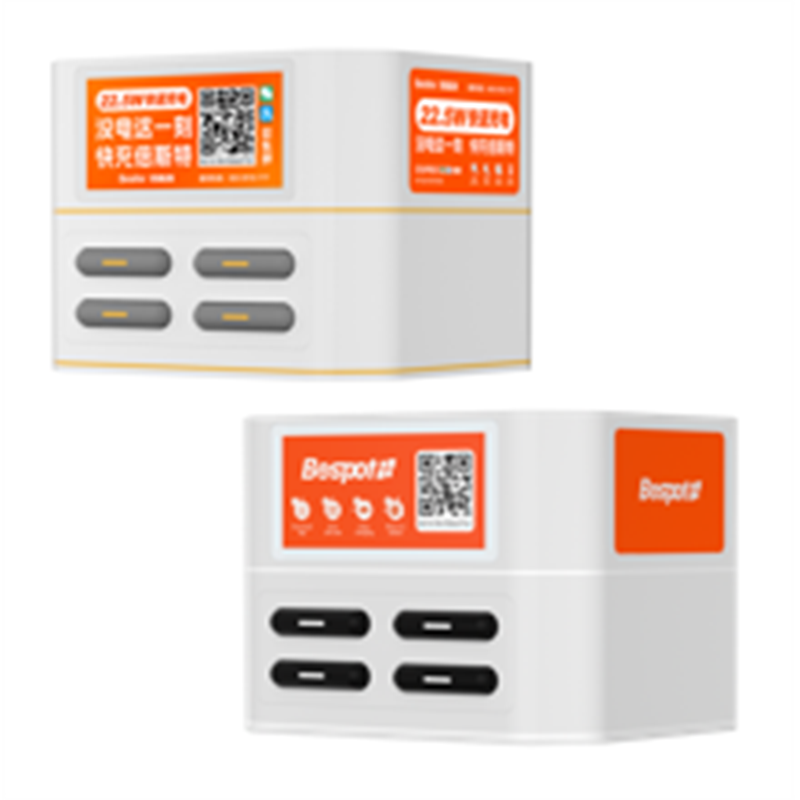
A shopping mall may need a large advertising kiosk, while a mobile phone store may prefer a compact countertop station.
This makes customization capability essential.
OEM/ODM requirements may include:
Cabinet design customization
Screen configuration
Software platform integration
Payment system adaptation
Brand customization
Production support
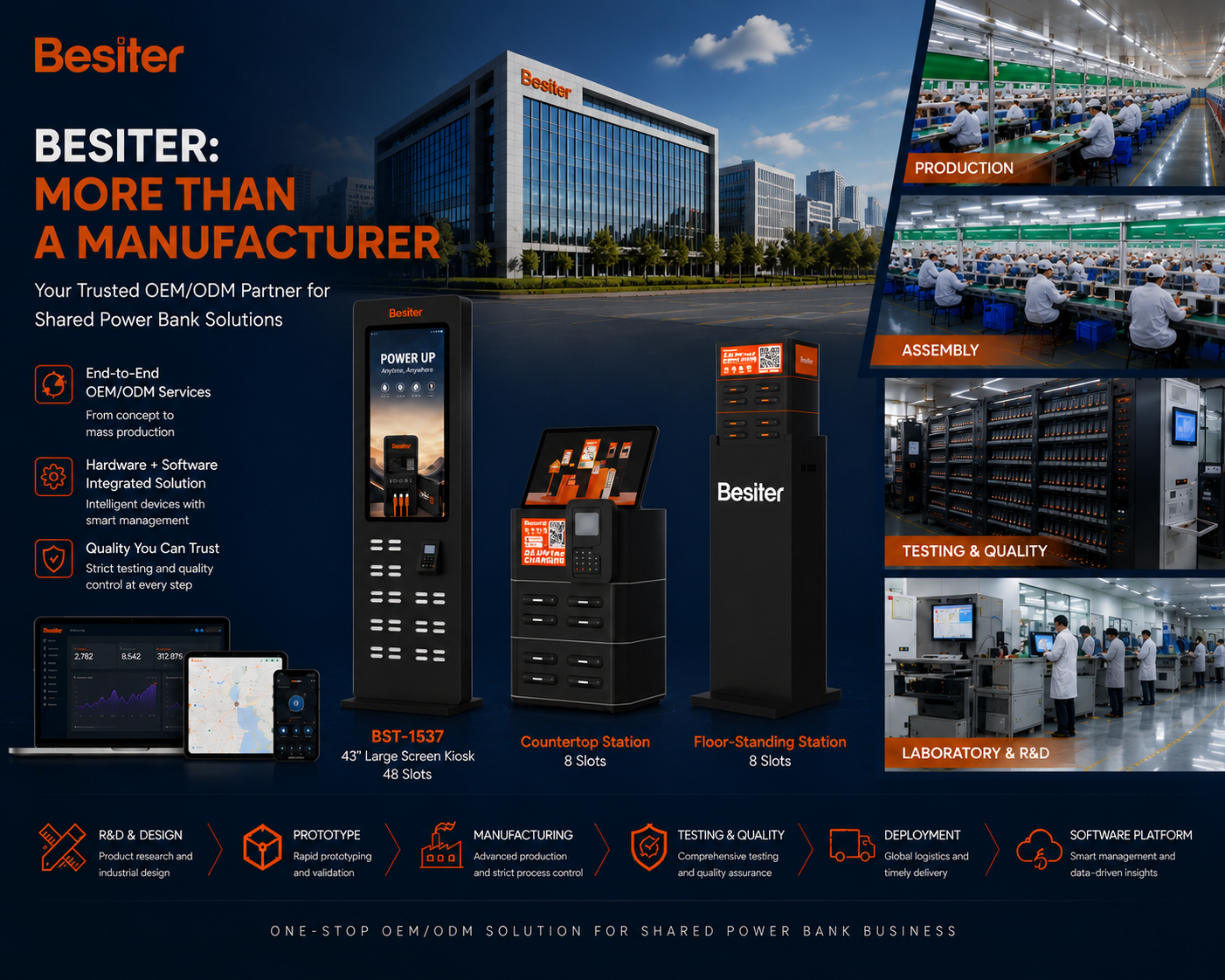
Besiter: More Than a Manufacturer
At Besiter, customers are not simply purchasing a charging station.
They are building a complete shared charging business.
As an integrated OEM/ODM partner, Besiter provides:
Product R&D
Hardware engineering
Software solutions
Manufacturing
Quality control
Global delivery support
From prototype development to mass production, Besiter helps partners create customized shared power bank solutions for different markets.
The Future of Smart Retail Technology
Digital signage will continue to play an important role in commercial environments.
However, the next generation of retail technology will focus on interaction rather than simple display.
Shared power bank stations represent this evolution by combining advertising, convenience, and revenue opportunities into one smart device.
For retailers, operators, and commercial property owners, this means creating more value from every square meter of space.
If you are exploring digital signage solutions, shared power bank business models, or OEM/ODM cooperation, Besiter can help build a solution designed for your market.

 EN
EN
 Hot News